When to Pick Your Tomatoes, Tomato University
harvest guide · heirloom tomatoes

When to Pick Your
Tomatoes

Color is just the beginning. Learn the exact signs of ripeness for every heirloom variety, and stop losing tomatoes to the vine or the counter.

Universal Signs of Ripeness

Universal signs of tomato ripeness
the visual check

Whatever the variety, look for the color to shift from its unripe base tone toward its mature color, but don't rely on this alone. More reliably, look for the area around the stem (the "shoulders") to lose its green and match the rest of the fruit. A fully green shoulder almost always means not ready.

the feel test

Gently squeeze the tomato. A ripe tomato gives slightly under pressure, like a stress ball that pushes back. Rock hard means unripe. Soft and yielding means overripe or starting to rot. You're looking for firm but with give.

the smell test

Smell the stem end. A ripe tomato smells like a tomato, earthy, sweet, slightly acidic. No smell at all means it's not ready. This works especially well for heirlooms with complex flavor profiles.

harvest tips
  • Pick in the morning when temperatures are cool. Tomatoes picked in afternoon heat have shorter shelf life.
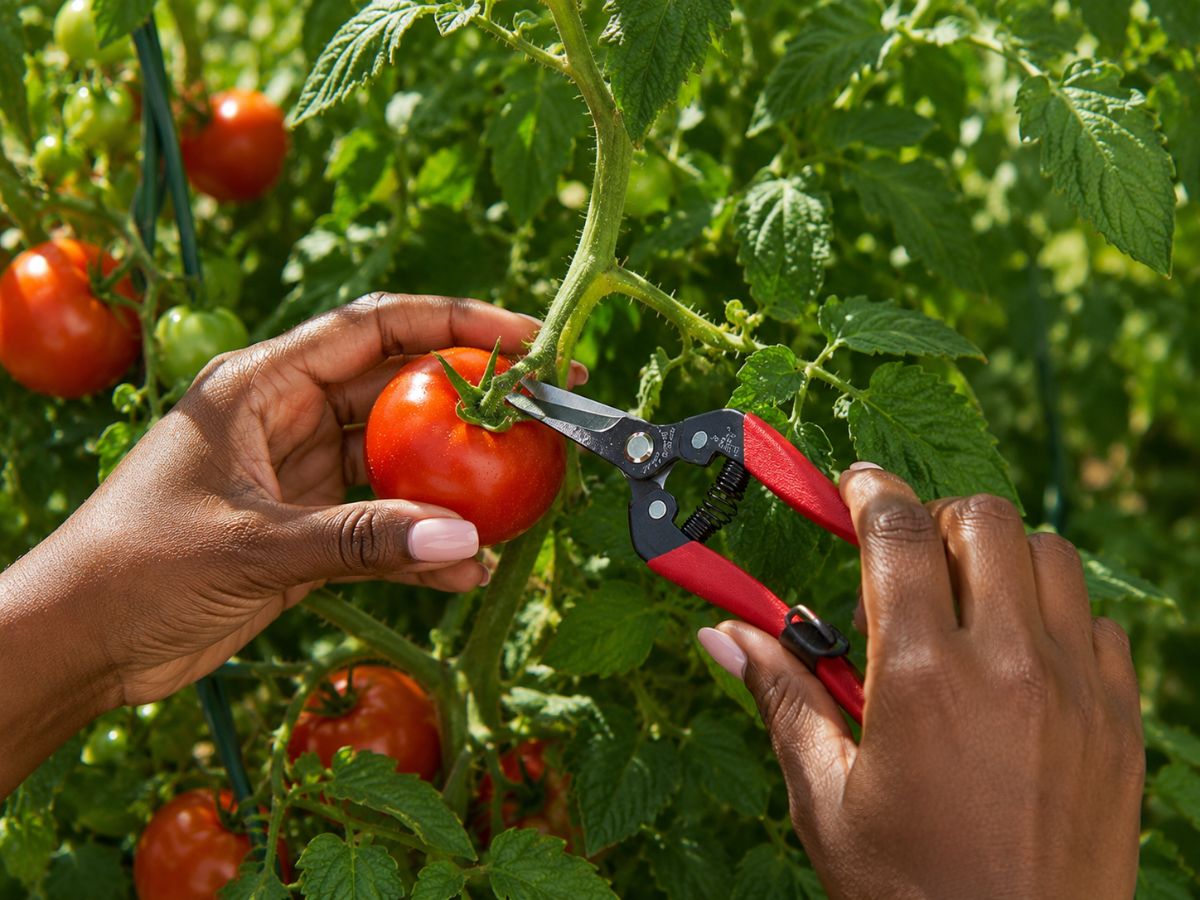
  • Twist and pull gently, or use snips. Pulling hard can damage the vine and surrounding fruit.
  • If you need to pick early (weather, pests, travel), pick at first color break and ripen on the counter stem-side down. Never refrigerate.
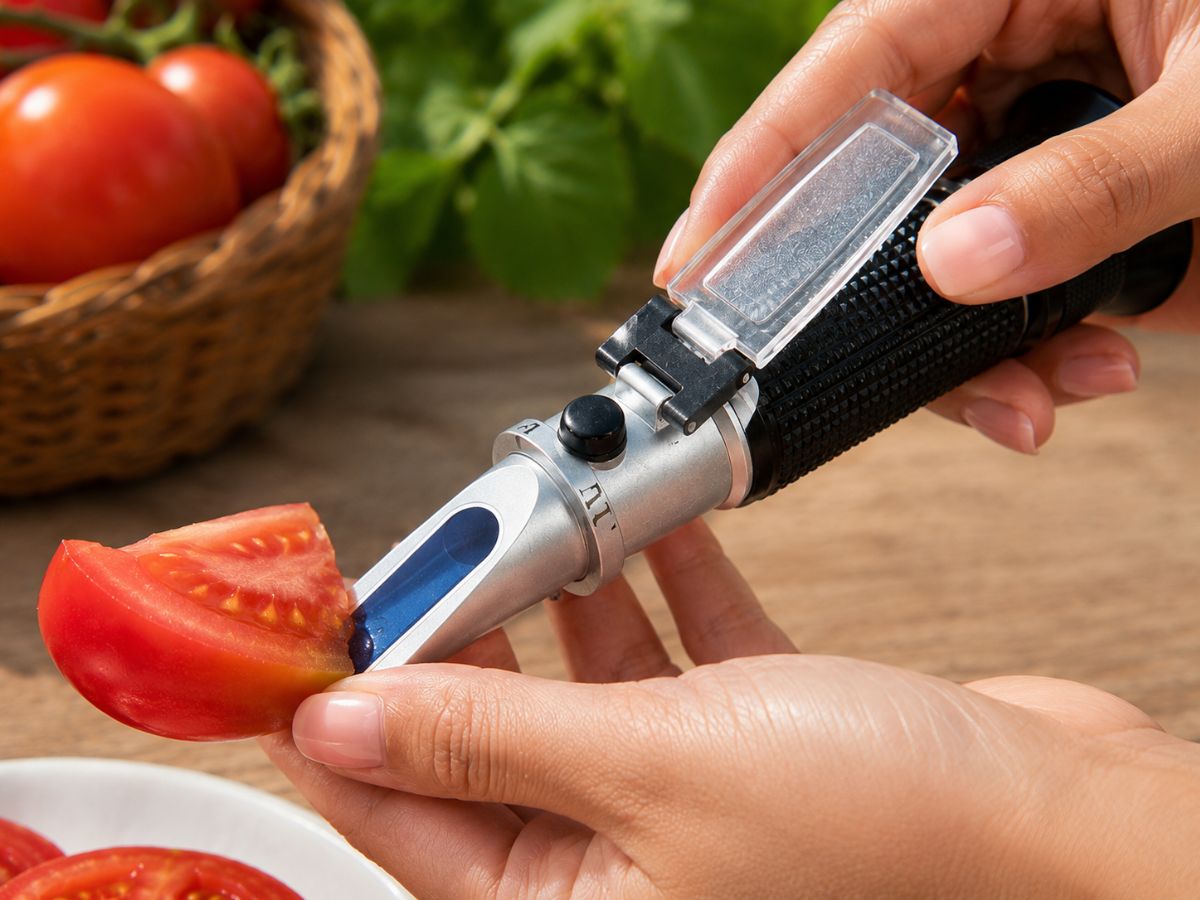
  • A refractometer measures brix (sugar content), readings above 6 mean ripe, above 8 mean excellent flavor.
recommended tools

Red & Pink Varieties

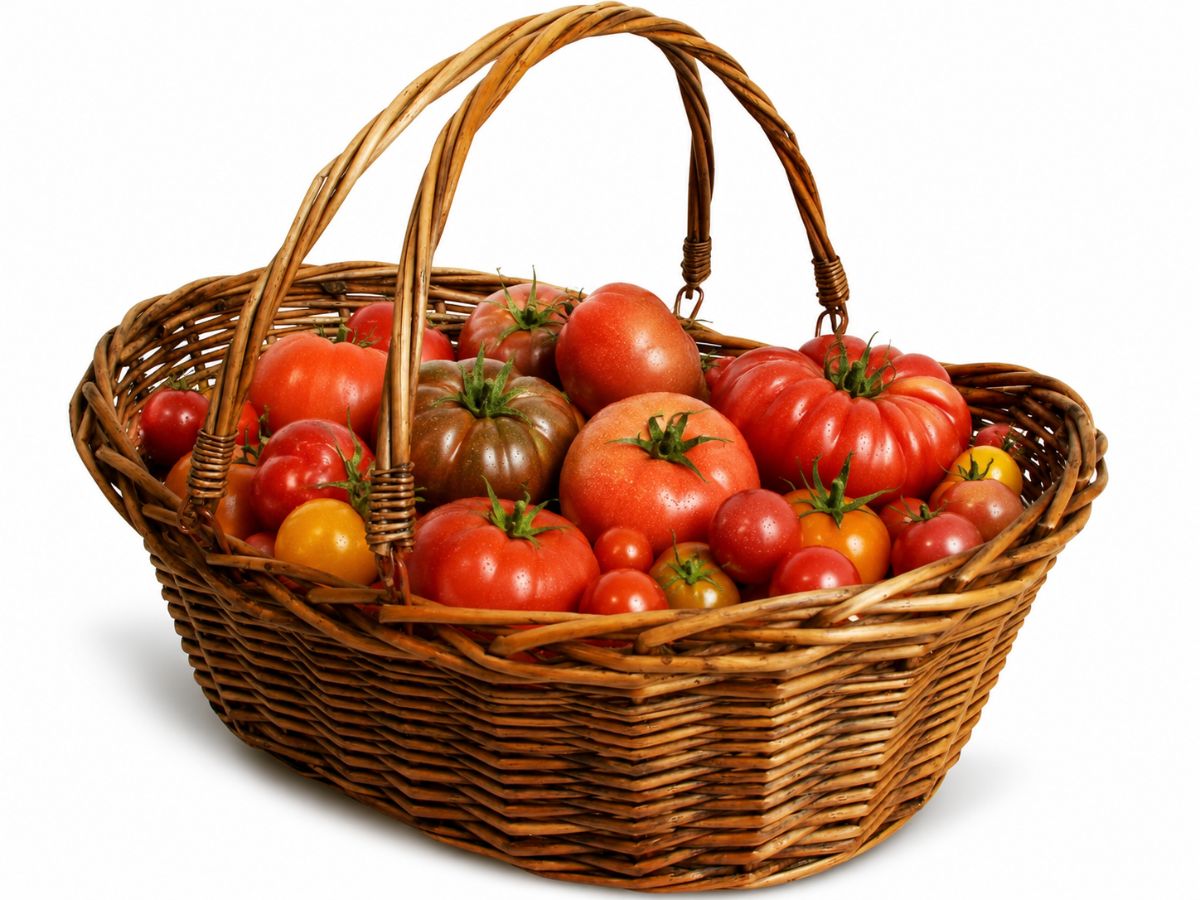
Red and pink heirloom tomatoes
what to look for

Deep, even red color across the entire fruit with no green shoulders. The skin should have a slight sheen and the blossom end should be fully colored. Brandywine specifically tends to stay slightly pink-tinged even when fully ripe, don't wait for deep red or you'll wait too long.

the timing

Large red heirlooms are slow. Brandywine takes 80 days from transplant, but that 80 days is from transplant, not from when you see color. Once color break starts, most large reds are ready within 5 to 7 days. Check daily once you see the first blush.

harvest tips
  • Brandywine ripens from the bottom up. When the bottom third is deep red and the shoulders are just losing their green, it's ready.
  • Large heirlooms crack easily once ripe. Pick promptly after a heavy rain, don't leave them on the vine.
  • Mortgage Lifter is more forgiving than Brandywine, it can hang on the vine an extra day or two without cracking.
recommended tools

Yellow, Orange & Green Varieties

Yellow orange and green heirloom tomatoes
what to look for

For yellow and orange varieties, look for the color to deepen and saturate, a Lemon Boy goes from pale lime-yellow to a rich golden yellow. For Green Zebra, look for the stripes to shift from dark green on light green to yellow-green on green. The fruit softens before it changes color noticeably.

the timing

Green varieties are the trickiest. Aunt Ruby's German Green is ripe when it feels soft, smells sweet, and has a slight blush of yellow at the blossom end. Green Zebra is ready when the background color shifts from white-green to yellow-green. Use the squeeze and smell test more than your eyes here.

harvest tips
  • With yellow and green varieties, trust your hands and nose more than your eyes. The feel test is the most reliable signal.
  • Pineapple tomatoes (bicolor) are ready when the yellow and red marbling is visible on the shoulders, the bottom colors up first.
  • Green varieties left too long go mushy fast. Once they give to the squeeze, pick immediately.
recommended tools

Black & Purple Varieties

Black and purple heirloom tomatoes
what to look for

Dark varieties show ripeness through color deepening, a Cherokee Purple shifts from murky green-purple to a rich brownish-red with dark shoulders. The shoulders are key: they should be a deep, dusty brown-purple, not green. The blossom end should show red or pink.

the timing

Dark heirlooms develop their anthocyanin (purple pigment) from sun exposure. A tomato that's been shaded by leaves will be less purple but still ripe. Don't use color as your only signal, they can look underripe and be perfectly ready. Black Krim is typically ready 75 to 80 days from transplant.

harvest tips
  • Cherokee Purple is ready when the interior shows that characteristic brick-red and purple marbling. Cut one open if you're unsure, the interior tells the story.
  • Dark varieties bruise easily once ripe. Handle gently and single-layer in your harvest basket.
  • Black Krim softens faster than most, if it passes the squeeze test, eat it within 2 days.
recommended tools

Cherry & Paste Tomatoes

Cherry and paste tomatoes
what to look for

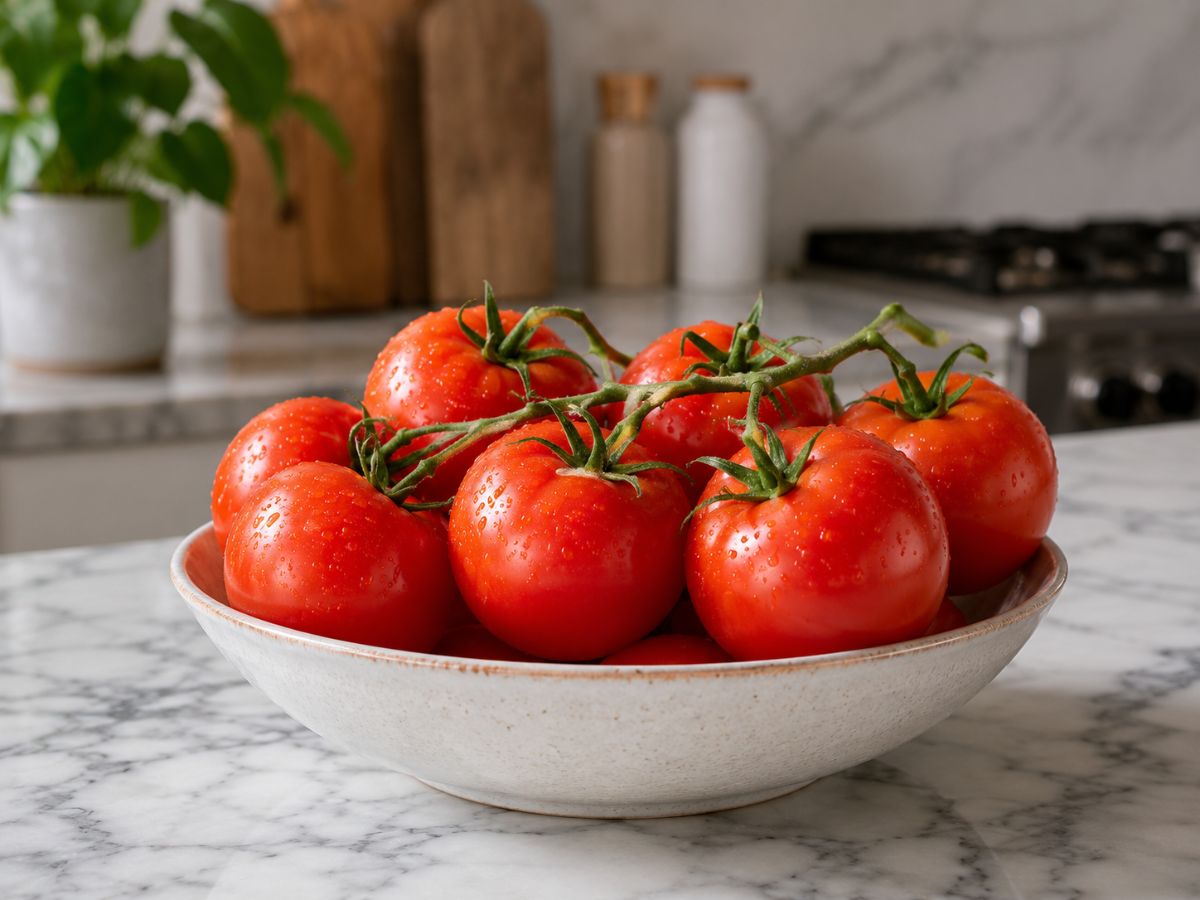
Cherry tomatoes are ready when they release from the vine with almost no resistance, a light tug and they come free. Sun Gold (orange) is ripe when fully orange and slightly soft. Left too long, cherries split on the vine. Paste tomatoes like San Marzano are ready when they're deep red, firm, and the skin starts to pull away slightly from the stem.

the timing

Cherries move fast once they start. Check every day once color break begins. A whole truss can go from unripe to overripe in 3 days in hot weather. Paste tomatoes are more forgiving and can hang on the vine an extra week without quality loss, they're bred for it.

harvest tips
  • Harvest cherry tomatoes by the truss when most are ripe. The rest will ripen off the vine within a day or two.
  • Sun Gold is best eaten slightly warm, straight from the vine. Refrigeration kills the flavor completely.
  • Paste tomatoes for sauce should be fully ripe and slightly soft, more sugar, less water, better flavor concentration.
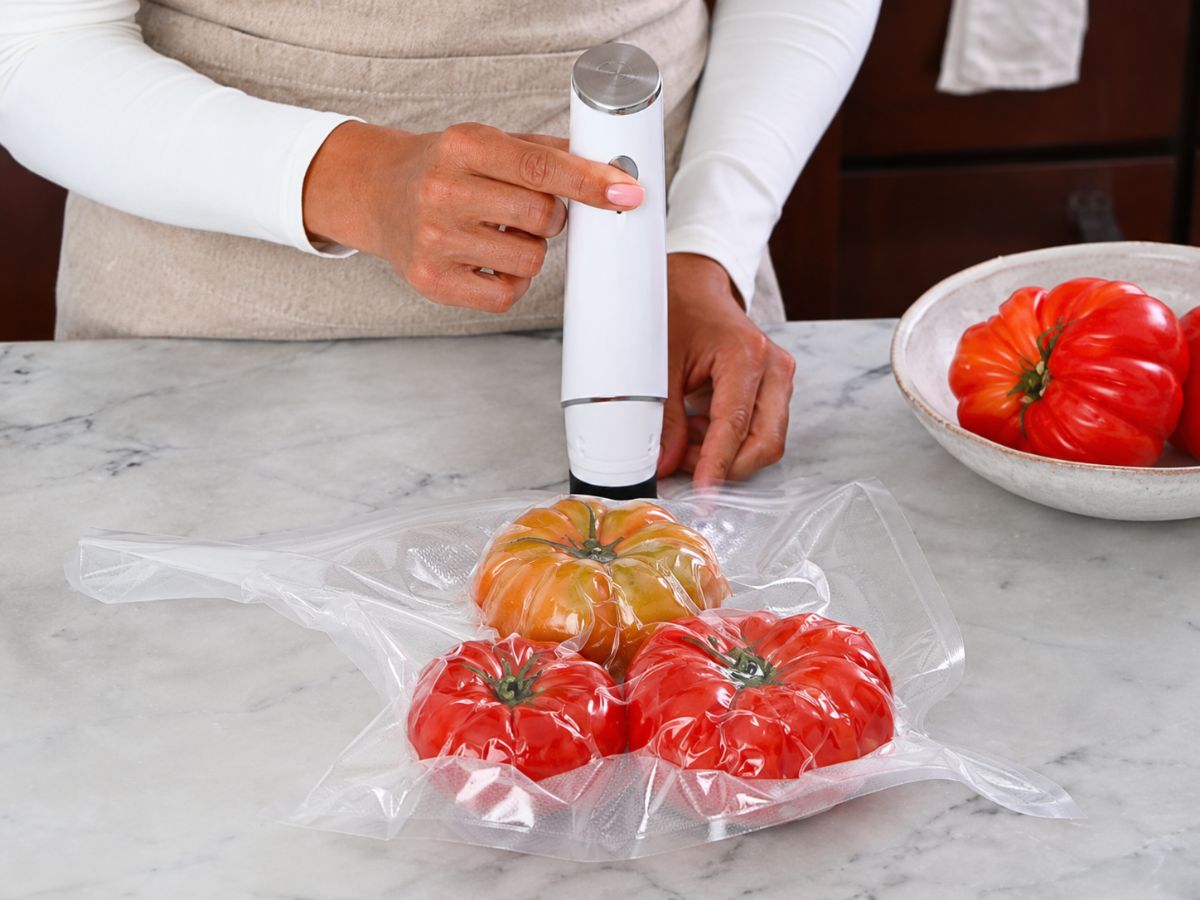
  • If you have more paste tomatoes than you can process, freeze them whole. Skins slip off after thawing.
recommended tools